
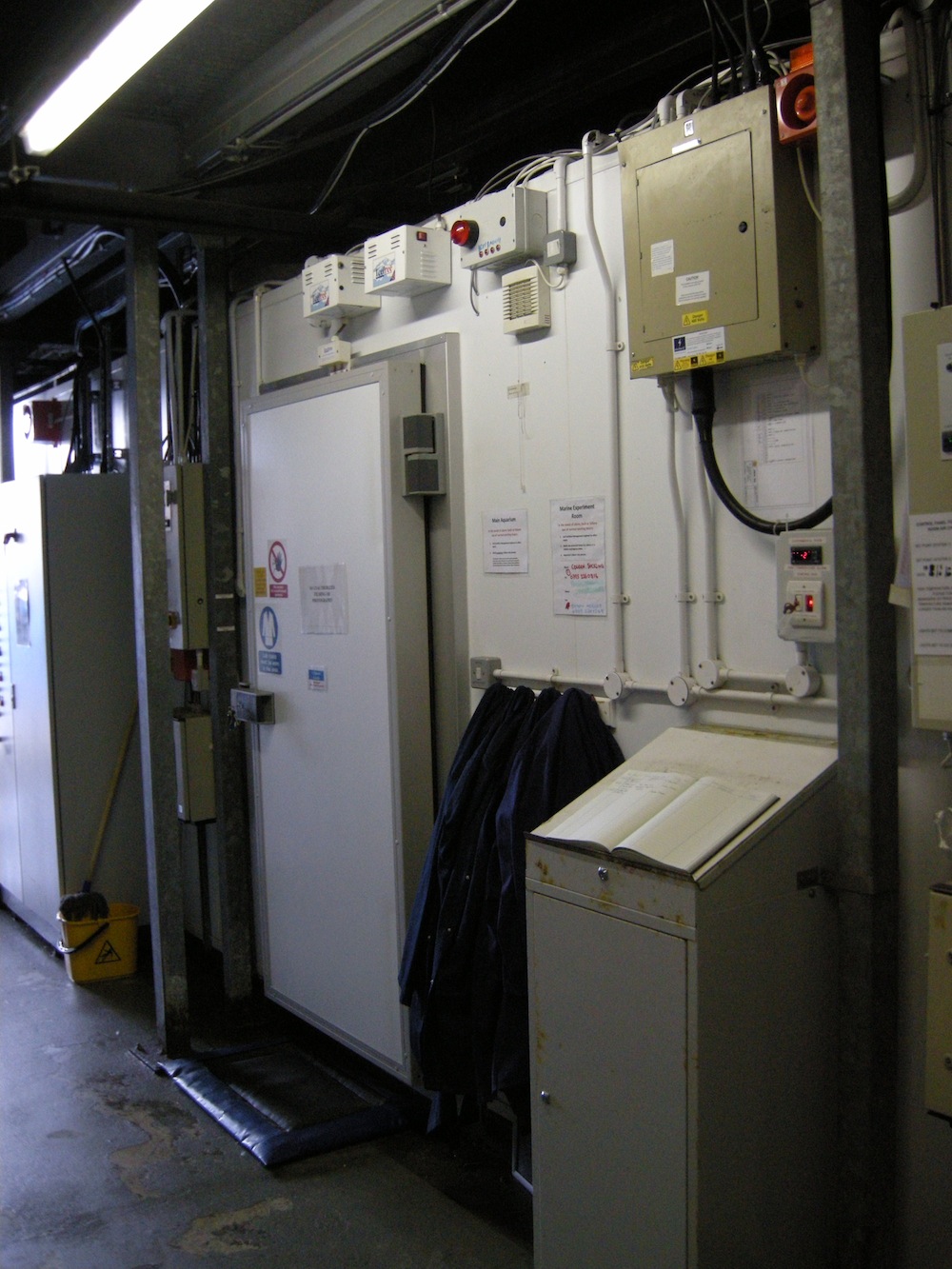
One of the most impressive experiences of this summer was that of having live Antarctic brittle stars in my hands – and I took that unique opportunity to identify them. Where? In the Marine Aquarium of British Antarctic Survey (Cambridge).
Different aquariums with various zoological groups carefully selected according to their way of life: cnidarians, teleosts, pycnogonids or echinoderms live in marine aquariums situated in a cold room, specially designed to shelter the animals at Antarctic waters temperature.

Sandy Cordiner-Lawrie, Marine Aquarium Manager of Biological Sciences Division (BAS), combining professionalism and affection takes daily care of the fragile marine creatures caught selectively by scuba-divers in Rothera Research Station (Adelaide Island, Antarctida).Among her numerous responsibilities there are those of control of the physico-chemical parameters of the water and maintaining it clean, feeding the animals etc.
 Different studies are being carried out, from metabolic routes to growth physiology, and the isolation of the specimens is often needed.
There was a really interesting phenomenon – an “echinoderm swarm”, some kind of caotic concentration of the animals on the wall of one of the tanks, while the rest of the tank was almost empty. It seemed that sea urchins, starfishes (the predator Labidiaster !) and sea cucumbers were desperately seeking a refuge among themselves.

Thank you, Sandy!
September 2010


